Water Flosser vs String Floss: A Careful Comparison
Quick answer: In a water flosser vs string floss decision, string makes direct contact with tight tooth surfaces while an irrigator uses a water stream and may be easier for braces or limited dexterity. Current comparative evidence is low certainty and does not support a universal winner. Use the method your dental professional recommends and that you can perform consistently.
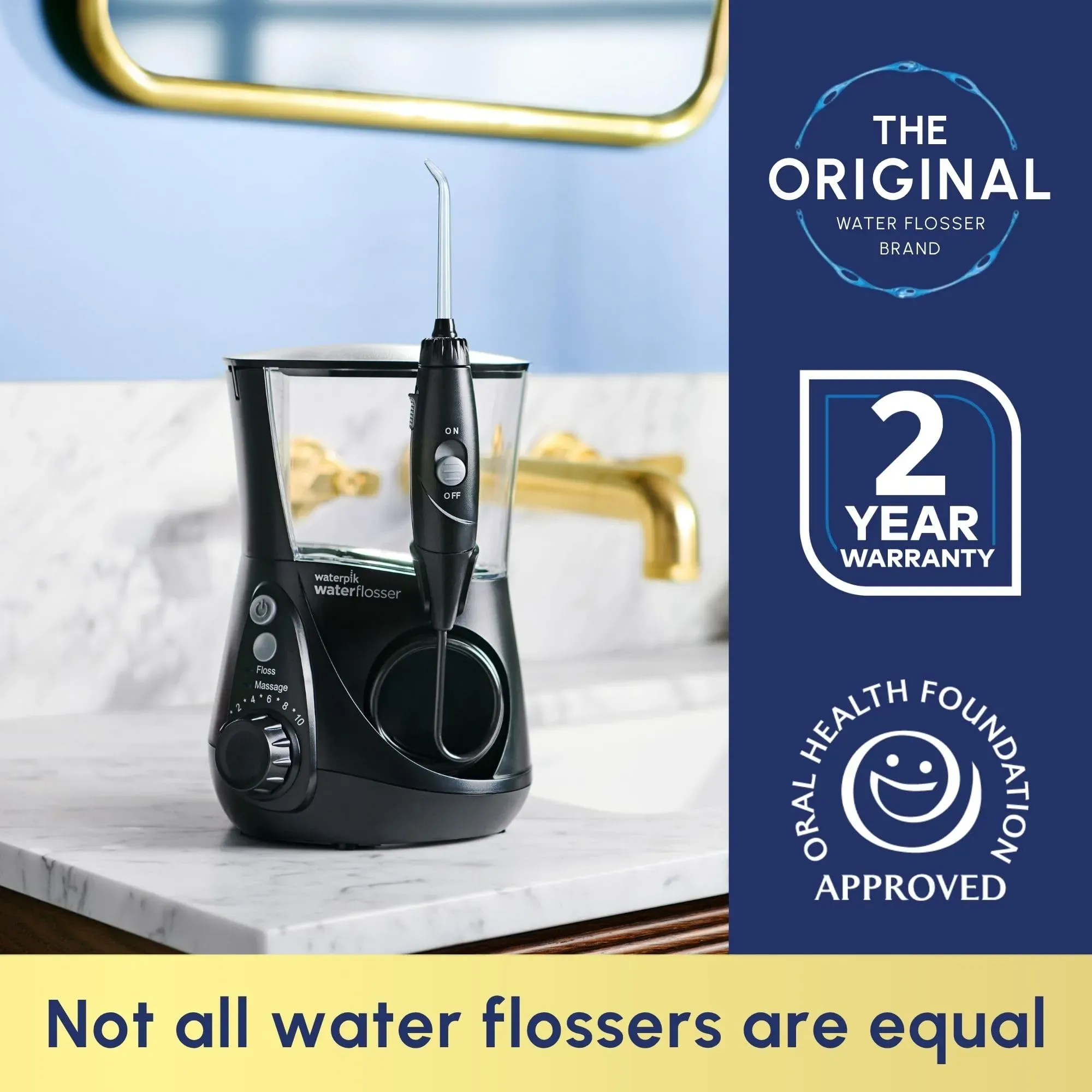
The tools do different mechanical jobs
String floss passes through a contact point and is curved against each tooth surface. That direct wiping can suit very tight contacts, but the technique is fiddly and can be difficult around wires, bridges or for hands with reduced dexterity. A water flosser directs a moving stream along the gumline and around structures without threading string through every space.
Those differences explain why preference and anatomy matter. They do not, by themselves, prove that one tool removes more plaque in every mouth.
Read the research without headline percentages
The Cochrane review found low- to very-low-certainty evidence across interdental devices. Oral irrigation may improve some short-term gingivitis measures, but evidence was inconsistent, and there was no established plaque difference versus toothbrushing alone. Evidence comparing oral irrigation with floss was also limited.
That is materially different from publishing a precise superiority percentage. The old page's figures lacked the conditions and certainty needed for a consumer conclusion, so they are not repeated here.
Match the method to the obstacle
- Tight contacts: ask whether floss or tape is needed for direct surface contact.
- Fixed braces: follow the orthodontic team's brushing and interdental-brush plan; a water stream may be an additional convenience.
- Implants, crowns or bridges: obtain site-specific professional instruction rather than choosing from a generic claim.
- Reduced hand dexterity: handle grip and one-handed controls may make irrigation easier than wrapping floss.
- Habit failure: the method completed correctly every day can be more useful than the theoretically ideal tool left in a drawer.
The decision is not always either/or
A dental professional may recommend different aids for different spaces in the same mouth. Do not interpret the purchase of an irrigator as permission to discard floss or interdental brushes. Keep brushing twice daily with fluoride toothpaste and follow individual advice.
If the outstanding question is financial and practical value rather than mechanism, use are water flossers worth the money. This page owns the method comparison only.
Questions people ask
Is a water flosser proven better than string floss?
No universal conclusion is supported. Cochrane rated much of the evidence low or very low certainty and found inconsistent results.
Does a water flosser replace floss for tight teeth?
Not automatically. String floss or tape can make direct contact in tight spaces; ask your dentist or hygienist what each gap needs.
Which method is easier with reduced hand dexterity?
A handled water flosser may be easier than wrapping and manoeuvring string, but controls, tank handling and individual advice still matter.
Can I use both string floss and a water flosser?
Yes, if that is appropriate for your mouth and practical routine. Different spaces may need different aids; avoid duplicating steps without professional guidance.
Sources and evidence boundary
Sources checked 20 July 2026. NHS and systematic-review sources inform care boundaries; manufacturer sources identify product features and instructions, not independent clinical superiority. Guidance, models, prices and seller terms can change.
Check the exact current listing
The page displayed £73.58 on 20 July 2026. Price, bundle and seller terms can change.
View WP-120UK — £73.58