Best Water Flosser for Dental Implants UK: What to Check
Quick answer: The best water flosser for dental implants UK care is not a universal model: ask the implant team which tip and technique suit the restoration. Then check gentle pressure control, a documented implant-appropriate tip, an easy-to-hold handle, manageable filling and UK support. No device guarantees prevention of peri-implant disease.
Begin with the implant maintenance plan
An implant, crown or bridge can create awkward spaces, while reduced finger dexterity can make threading floss difficult. The correct aid depends on the restoration, access and tissue condition. Ask the dentist, hygienist or implant team to demonstrate the route and identify any area where floss, an interdental brush or another aid is still required.
Do not choose pressure by the value of the dental work or by fear of peri-implant disease. A stronger stream is not automatically safer or more effective.
Features that reduce avoidable friction
- Fine, gentle control: the user should be able to start comfortably and repeat the same setting without a complicated sequence.
- Documented tip: Waterpik identifies its Plaque Seeker tip for implants, crowns, bridges, retainers and general use. Confirm compatibility with the exact base.
- Handle and pause: an easy grip and water control can matter where hand movement is limited.
- Reservoir handling: check weight, lid, filling height and whether a full tank avoids rushed refills.
- Support: retain the manual, model code, receipt and UK replacement-tip route.
A transparent countertop reference
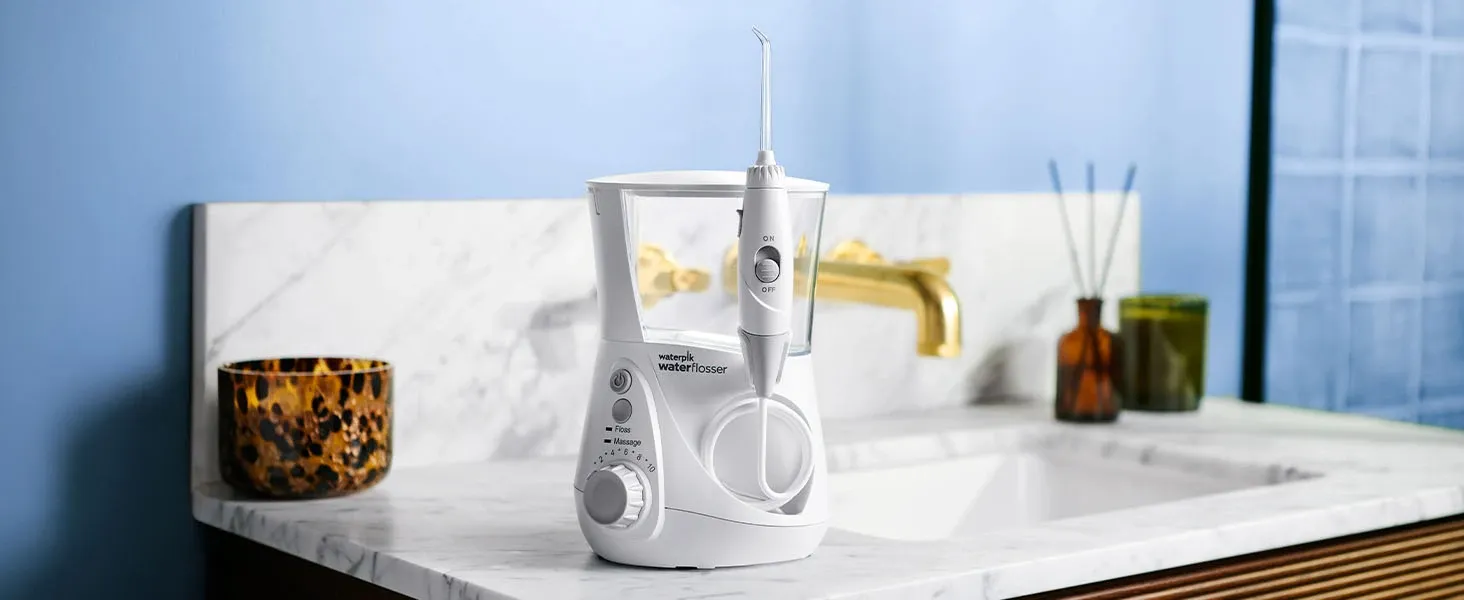
Waterpik UK lists the Ultra Professional with 10 pressure settings from 10 to 100 PSI, five tips, a 400 ml/min flow rate and a 24-month warranty. Its published handle and reservoir features may suit a user who wants stable countertop operation rather than charging a cordless unit.
Those manufacturer specifications do not prove that it is the best choice for every implant. The exact restoration and professional instruction remain the deciding evidence. The current manual also says the Plaque Seeker tip is replaced every three months.
Use and stop boundaries
- Have the implant team show the path and pressure approach for the individual restoration.
- Use the exact compatible tip and inspect it for wear before each session.
- Keep brushing and any other prescribed interdental steps.
- Do not put unapproved solutions in the reservoir or force a tip beneath tissue.
- Seek dental advice for bleeding, swelling, pain, discharge, movement or a change around the implant or crown.
This page does not promise that a flosser prevents peri-implantitis, protects a warranty or replaces professional maintenance.
Questions people ask
Which Waterpik tip is intended for implants and crowns?
Waterpik identifies the Plaque Seeker tip for implants, crowns, bridges and retainers. Confirm exact base compatibility and technique with your dental team.
Should implant users start at maximum pressure?
No. Use the comfortable setting and technique demonstrated for the restoration and stay within the exact model manual.
Is a countertop water flosser easier for older hands?
It can remove battery charging and offer a stable base, but tank lifting, handle grip, controls, counter space and the power arrangement still need checking.
Can a water flosser prevent peri-implantitis?
No consumer guide can promise that. Keep professional reviews and the full prescribed cleaning plan, and seek advice for any symptom or change.
Sources and evidence boundary
Sources checked 20 July 2026. NHS and systematic-review sources inform care boundaries; manufacturer sources identify product features and instructions, not independent clinical superiority. Guidance, models, prices and seller terms can change.
Check the exact current listing
The page displayed £73.58 on 20 July 2026. Price, bundle and seller terms can change.
View WP-120UK — £73.58